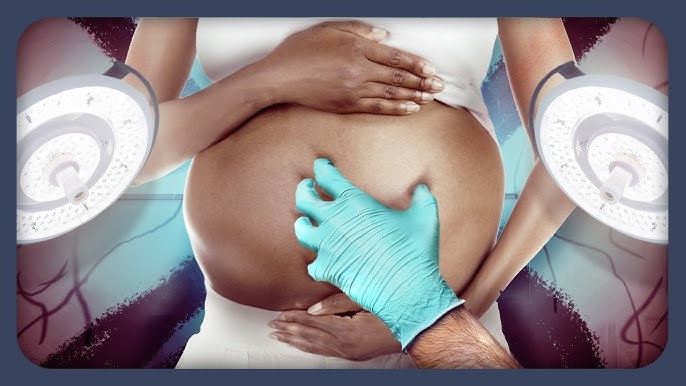
Unrecognised Violence: when women face obstetric abuse in childbirth
Unrecognised Violence:
When women face obstetric abuse in childbirth
Introduction
November 25 marks the International Day for the Elimination of Violence against Women — a day to confront a painful truth: too many women still face violence simply for being women. Since 2011, this date has also become known as Roses Revolution Day, an international movement that shines a light on a form of violence many people don’t even recognise: obstetric violence.
Today, I want to raise my voice for these women.
For the women who entered hospitals hoping for safety, and left with wounds far deeper than the ones on their bodies.
For the women who still hesitate to speak, who have been told their suffering was “normal,” “necessary,” or “just how birth is.”
For the women who deserve better.
What is obstetric violence — really?
Obstetric violence is not a new concept. It happens when a woman is mistreated, disrespected, or harmed during pregnancy, birth, or postpartum care. It is any behaviour that strips her of dignity, autonomy, or the right to decide what happens to her own body.
It can be as subtle as ridicule — a nurse telling a labouring woman to “stop screaming.”
It can be as blatant as threats — “If you don’t cooperate, your baby will die.”
It can be invasive —procedures performed without consent, from forced episiotomies to unwanted vaginal examinations.
It can be neglect — women left alone during labour, ignored while calling for help.
It can be discrimination — because of age, marital status, socioeconomic background, ethnicity.
And still, many women stay silent.
Why?
Because they are told these experiences are “normal,” that they should be grateful their baby is alive, that their own pain is irrelevant.
How common is it?
Much more common than most people want to believe.
Global studies suggest that up to 60% of women experience some form of obstetric violence. In China, one study found that 51.6% of women* reported experiencing obstetric violence. Among this group, 82% faced verbal abuse, 80.4% psychological–emotional harm, and 57.3% physical violence.
In other words, once obstetric violence occurs, it is rarely a single incident.
If this happened in any other area of medicine, people would demand answers, not silence.
Yet in maternity care, it continues — not because people don’t see it, but because many have never learned to define it as violence.
Women are expected to endure, to stay grateful, to stay quiet.
And when suffering is treated as a natural part of giving birth, it disappears from the conversation.
The consequences: pain that does not end at birth
Obstetric violence doesn’t fade when the baby is born. It leaves marks — emotional, physical, relational.
Women report birth trauma, fear of hospitals, difficulties bonding with their babies, depression, anxiety, nightmares, changes in sexuality, avoidance of future pregnancies, and complete loss of trust in the healthcare system.
How many women walk through life carrying trauma that nobody ever asks about?
How many stay silent because “you should just be happy you have a healthy baby”?
What can women do when this happens?
There is no single correct response — but there are choices.
Women can request their medical records.
They can file a complaint, if they feel safe to do so.
They can speak with someone trained to support trauma recovery.
They can write their experience down, name it, reclaim their story.
They can refuse to be silenced.
And most importantly:
they can know, deeply and fully, that none of this was their fault.
Can obstetric violence be prevented?
Yes — but it takes more than individual effort.
Obstetric violence is not caused by “uneducated mothers.”
It is caused by systems that normalise disrespect and silence women.
Still, information is power.
Preparing for birth, understanding one’s rights, choosing supportive care providers when possible, and having a trusted companion or doula present can make a significant difference.
Birth should never be something a woman survives.
It should be something she can remember with dignity.
Raise your voice — because silence protects no one
I know what it means to give birth in fear.
During my first pregnancy, a nurse treated me so disrespectfully that I became terrified of going to the hospital.
I ended up giving birth in our car on a highway service area.
Later, I became a doula.
During my third birth, I asked a doctor to leave the delivery room because she frightened me and repeatedly ignored my request not to be examined.
These moments shaped the work I do today.
They are why I speak up — and why I want other women to speak up, too.
If you have experienced obstetric violence, your story matters.
Tell it.
Write it.
Share it with someone you trust.
Your voice may be the one that helps another woman realise she is not alone.
And if you need someone to talk to — I am here.
You deserve support, you deserve healing, and you deserve a birth story that honours you, not harms you.
No woman should ever have to give birth in fear.
Not today, not tomorrow, not ever.
___________________________________________________
*Huang, S., Li, M., Zhang, M. et al. Status and influencing factors of obstetric violence: a mixed study. BMC Public Health 25, 3586 (2025). https://doi.org/10.1186/s12889-025-24169-y
