You can have another one
“You Can Have Another One”
When comfort becomes cruelty: rethinking the way we respond to pregnancy loss
For about a week now, I have felt confused, unsettled, and increasingly angry the more I think about what happened.
“You can have another one.”
This is what women — and their families — are told after experiencing perinatal loss.
“You’re still young, just try again.”
“At least you know you can get pregnant.”
“Be strong, don’t cry.”
“It wasn’t a real baby yet.”
It is unbelievable.
When a colleague’s bike went missing, people helped him search and the police were involved. “Don’t worry, we’ll find it,” they said — not “You can buy a new one.”
When a teacher’s cat disappeared, neighbours organised a search, friends spread the message online, and others came over to comfort her — not “Don’t be emotional, it’s only a pet.”
When a friend’s father died, people said, “I know how much he meant to you. Take all the time you need. Grief has no timeline” — not “At least you still have your mother.”
When my brother died young from ALS, people hugged me and said, “I’m so sorry for your loss. If you want to talk about him, I’m here” — not “At least he didn’t suffer too long.”
But when a baby dies before birth, the grief becomes invisible.
About 20% of women with early pregnancy loss and 66.7% of women experiencing stillbirth develop post-traumatic stress symptoms — sometimes lasting up to five years.
Between 25% and 75% of families develop complicated grief, a preventable condition tied to depression, anxiety, suicidality, sleep disorders, eating disorders, hypertension, diabetes, cancer, and even premature death.
A pregnancy loss increases a woman’s suicide risk fourfold.
And yet, shockingly, society still believes: “You can have another one.”
Why? Because these women — and their partners — grieve unseen.
When someone in your community dies, there are rituals, visitors, conversations, physical reminders.
When a neighbour loses a baby before birth, few notice the belly that grew and quietly disappeared.
When a colleague miscarries early, you did not even know she had been expecting a child.
Globally, people assume pregnancy loss happens “too early” to matter. But research shows the opposite. Fathers suffer too:
1 in 10 meets the criteria for PTSD.
Over 80% feel helpless.
Around 30% feel terrified.
70% relive the event.
20% say their symptoms harm their relationships.
Pregnancy loss matters — profoundly.
And there are simple, effective ways to support families.
But the biggest barrier remains the dismissive idea that “another baby will fix it.”
And here is what happened that made me angry.
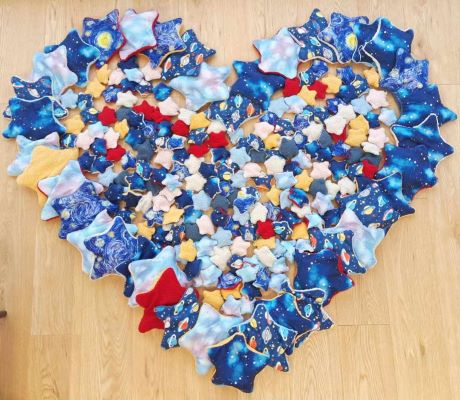
For the past two years, together with a group of extraordinary women, I have run a volunteer project to support families through pregnancy loss and stillbirth. Our aim is simple: to see them, acknowledge them, accompany them, and place something meaningful into their empty hands and hearts.
Eventually, our project was noticed by several women in leadership positions who encouraged us to apply for more volunteer project competitions. With effort and many late nights, we entered a city showcase for projects supporting women, children, and families — and we won gold.
Encouraged by this recognition, we participated in another, larger competition that involved multiple stages and a more complex evaluation process. That was when things became unusual.
In the recall round, our project was assessed by both human judges and an AI scoring system. Interestingly, the AI responded with a more empathetic and supportive score than some of the human evaluators —we made it into the final round.
Suddenly, our project was handed over to “competition experts,” who transformed it into something highly polished and elaborate. Instead of refining what truly made us unique, the project was reshaped into a high-tech presentation with a professional host — impressive, but disconnected from the authenticity and sensitivity that define our real work with families.
We received an “Outstanding Award” — a thoughtful gesture, though in the context of the event it was more of a symbolic consolation prize.
I’m not upset about losing. There were excellent projects, and judging is never easy.
I did not expect to win gold again — and truly, everyone can use a wooden spoon.
But here is what hurts:
We did not lose because our project lacked quality.
We lost because the belief that “women can just have another one” is so deeply rooted that even highly educated people — professors, experts — cannot fully see the magnitude of this grief.
Not because they are unkind.
Not because they don’t care.
But because our society has never learned to recognise the death of someone who was never introduced.
And that is why I am angry.
Not at individuals, not at judges — but at a culture of silence that leaves grieving families invisible, unsupported, and misunderstood.
Pregnancy loss deserves to be seen.
Grief deserves to be named.
Parents deserve compassion, not replacement.
If this article does anything, I hope it opens one more conversation.
That someone reading it will pause before saying “You can have another one.”
That someone will sit beside a grieving parent and say, “I’m here. Your baby mattered.”
Because healing begins the moment we choose to see what others have been trying to carry alone.

